Masterclass on 'Decolonizing water research: Creative ethno-graphies and knowledge co-creation for liminal ecologies'
- Date
- 3 June 2026
- Time
- 12:00 -15:00
- Location
- Bushuis/Oost-Indisch Huis
- Room
- Kartinizaal
About the Masterclass
Mainstream scientific research often marginalizes non-textual and experiential ways of knowing, recognizing,and appreciating the pluriverse. More recently, researchers are combining conventional ethnographic or qualitative methods with visualization strategies not only to integrate diverse knowledge systems but also disseminate plural explorations in multi-modal formats for wider reach. Creative ‘ethno-graphies’ combine qualitative research with visualization techniques such as illustrative storytelling, co-curation of augmented artifacts, and collaborative mapping as powerful tools of knowledge co-creation in crafting transformative transdisciplinary outcomes.
Liminal ecologies, existing in perpetual in-betweenness: land and water, salt and fresh, human and non-human, stability and volatility – defined by flux and not fixity, are characterised by knowledges that are somatic, oral, intergenerational – encoded in songs, rhythms, and memories. Beyond vulnerability indices and cost-benefit ratios, creative ethno-graphy translates lived experiences and relational encounters into multi-modal forms – rendering the tacit, sensory, and dialogical dimensions of social life into a communicable account – inscribing culture ‘with’ and not ‘about’ textured socio-ecological landscapes. For liminal ecosystems facing both physical and epistemic erasure, ethno-graphy translates into an act of epistemic sovereignty with communities as co-creators and curators of knowledge.
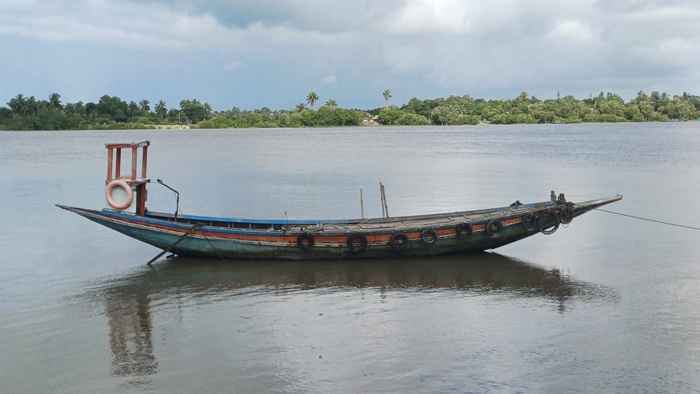
In this class, I will make students familiarized with the conceptual and technical dimensions of the ‘ethno-graphic’ approach, using examples from the Bengal basin – interspersed with wetlands, marshes, river islands, and delta – severely manipulated by colonial hydrology and hosting diverse vernacular-indigenous epistemologies. There will be an interactive workshop that will include hands-on exercises, visual elicitation activities, collaborative roleplay-based story board exercises, etc. After the class, the students will not only gauge the potential of the creative ethno-graphic method in in-situ research contexts, but also apply some of its components, followed by an appreciation of the 5Is of ethno-graphy: interaction, immersion, innovation, information, and inclusion.
Who can apply?
Credits: 1 EC is available for RMA and PhD candidates participating in this Masterclass. NICA supports this Masterclass, and it is cross-advertised on their website.
Requirements: Registered participants will need, in order to get the EC, to complete 3 assigned readings, that we send to you in pdf in advance; such participants need to bring responses of about 200 words on the 3 readings to the Masterclass.
Maximum 40 participants.
To register please contact co-organizer Prof. Barnita Bagchi (Scholar in Residence host) b.bagchi@uva.nl
Deadline to register: 21 May 2026