Seed Grant Spotlight #3 The RPA Decolonial Futures Workshop “Colonial Mobility and Legal Encounters: Rethinking the VOC’s Role in Asia”
14 April 2026
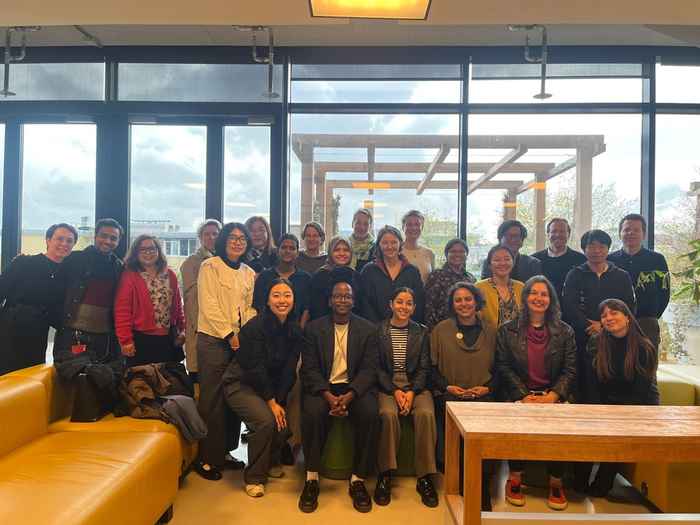
The inter-disciplinary event gathered scholars from Europe, Asia, and Africa to collectively reflect on the ‘colonial mobility’ of the VOC (the Dutch East India Company) to understand how early modern colonial empires functioned beyond traditional state structures, and on its contemporary resonance – with its long-lasting impact of restricting and reshaping state sovereignty in former colonies across Asia.
The workshop features four paper panels: “VOC, Contracts, and Treaties under International Law”; “Local Resistance against the VOC and the Frustrated Colonists”; “VOC, Non-human Subjects, and the Materiality of Colonialism”; and “VOC, the Practice of International Arbitration, and Jurisdictional Encounters”. Drawing on a wide range of archival sources and deploying a diverse array of methods, speakers examine the VOC’s legal encounters in sites including, but not limited to, Safavid Persia, Southern Africa, Aceh, Ayutthaya, and Bali. Their rich and imaginative engagements with the theme of colonial mobility and legal encounters also lead us into the classical texts of Grotius, the colonial hearths of the VOC, and the Chinese Council in Batavia, opening up new perspectives on the dynamic legal and cultural exchanges that unfolded when the VOC encountered local Asian polities and communities. Each panel benefited from the presence of a senior commentator: Kanad Bagchi (University of Amsterdam), Lys Kulamadayil (Geneva Graduate Institute), Tim Lindgren (European University Institute), and Alexandra Kemmerer (Max Planck Institute for Comparative Public Law and International Law), all of whom engaged with the papers through generous, constructive, and incisive commentary that deepened the discussion of the papers in each panel.
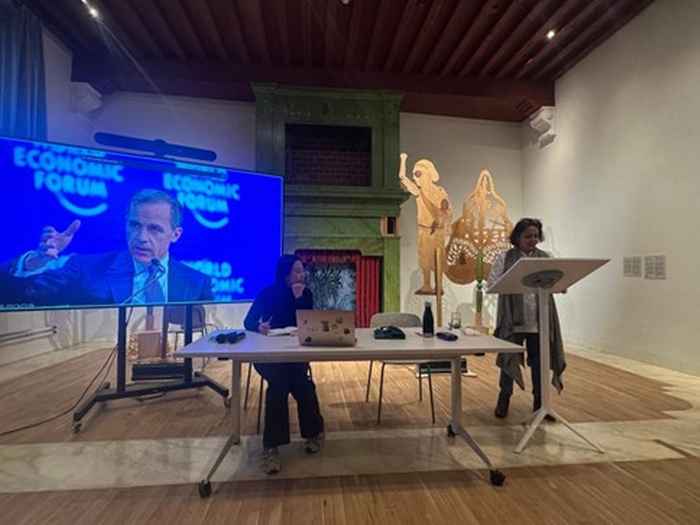
The highlight of the workshop was the keynote lecture given by Melbourne Laureate Professor Sundhya Pahuja, titled “Metastatic legality: Company, State and the Spread of European Law”. In the lecture, Professor Pahuja theorised the VOC encounters with Southern localities as “a moment in which the extraterritorial expansion of European laws happens through the export to the South of an intra-European dispute and the prefigurative displacement of rival laws through a joinder between company and state”. This displacement, as elaborated by Professor Pahuja in her lecture, is later “actualised through imperial assertions which ground their authority in the earlier prefigurative moment through disciplinary historiographies and routines which re/inscribe virtue (uniquely) in European law… all while underpinning that claim with violence.” Set in the distinctive surroundings of the Kartinizaal, the former VOC room, Professor Pahuja’s lecture offered a compelling provocation to reflect on the legal techniques of company-state empire and on the responsibility of scholars of law and history to understand theory as a form of practice, and legal education as an enduring site of authorisation and transmission.
The workshop was also delighted to feature two special sessions. In an interactive session on the VOC archives, titled “The Others in the Archive: The GLOBALISE Project and Seeking Out New Histories in the Dutch East India Company”, Lodewijk Petram (Manager of the GLOBALISE Project and Senior Researcher at the Huygens Institute) and Manjusha Kuruppath (Postdoctoral Team Lead for Historical Contextualisation in the GLOBALISE Project) reflected on how their work in transcribing and contextualising the VOC archives can significantly enhance the accessibility and searchability of VOC history.
In an engaging and generative conversation, River Baars (SOAS) and Mikki Stelder (UvA) reflected on the legacies of the VOC and on their own positionality in relation to their research. Their discussion explored the relationship between the company and the state, the global and the local, the imaginary and the material, and the past and the present in thinking about the VOC.
The organisers of the workshop warmly thank our partner institutions, the Laureate Research Programme on Global Corporations and International Law and the Amsterdam Center for International Law, as well as our collaborators, including Andrea Leiter, Noelle Richardson, Eliana Cusato, Ellysia van der Werf, and Ni Putu Widhia Setiani Asak. We are deeply grateful for the support of our collaborators and all participants, speakers, and commentators in making this workshop possible, for being part of a community of researchers from near and far in this shared academic endeavour, and for contributing to the study of the VOC empire with such care, intellectual generosity, and continual insight, inspiration, and provocation.
The workshop was made possible through the generous support of the Laureate Research Programme “Global Corporations and International Law” at the University of Melbourne and the Amsterdam Center for International Law at Amsterdam Law School.